
Crown vs Filling - Which Treatment Do You Need?
June 24, 2026
Crown vs Filling: Which Treatment Do You Need?
When a tooth becomes damaged by decay, cracks, or wear, one of the most common questions patients ask is: Do I need a filling or a crown?
Both fillings and crowns are designed to restore damaged teeth, protect your oral health, and prevent further problems—but they serve different purposes. The right treatment depends on the size of the damage, the strength of the remaining tooth, and the long-term prognosis.
Understanding the difference can help you feel more confident about your treatment plan.
What Is a Filling?
A filling is used to repair a tooth that has been affected by a cavity, minor fracture, or small area of wear. During treatment, the damaged or decayed portion of the tooth is removed and replaced with a strong restorative material, usually tooth-coloured composite resin.
Fillings are ideal when:
- The cavity is small to moderate in size
- Most of the natural tooth structure is still healthy
- The tooth remains strong enough to function normally
- There are no major cracks or fractures
Fillings are conservative because they preserve more of your natural tooth structure while restoring strength and function.
What Is a Crown?
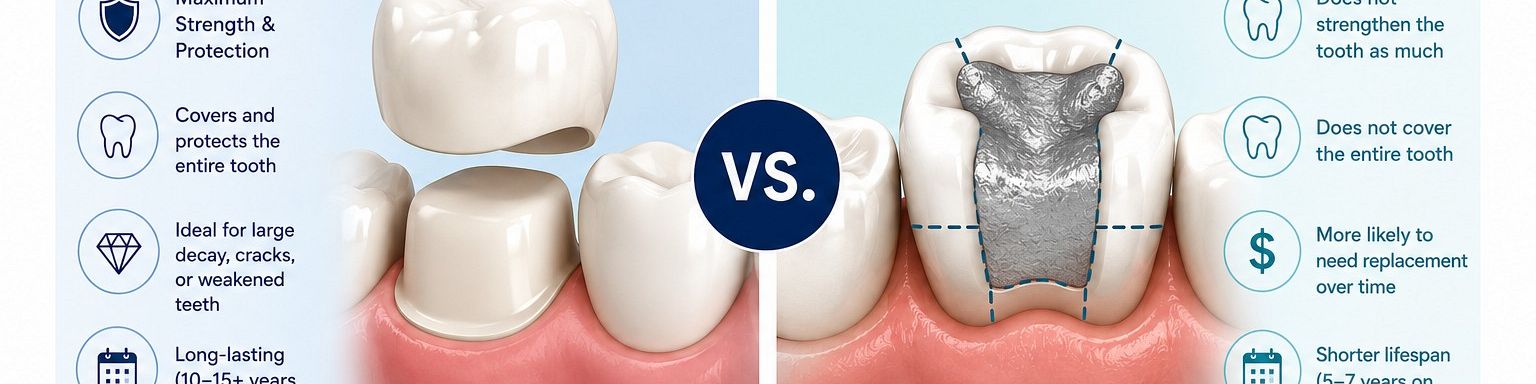
A crown is a custom-made restoration that covers the entire visible portion of the tooth, acting like a protective cap. Crowns restore strength, function, and appearance while protecting teeth that are significantly weakened.
Crowns are recommended when:
- A large portion of the tooth is damaged or decayed
- A tooth has a crack or fracture
- The tooth has a very large existing filling
- The tooth has had root canal treatment
- The remaining tooth structure is too weak to support a filling
Crowns provide full coverage and significantly reduce the risk of the tooth breaking in the future.
Crown vs Filling: What’s the Difference?
The main difference comes down to how much of the tooth needs repair.
Fillings:
- Repair smaller areas of damage
- Preserve more natural tooth structure
- Are typically completed in one visit
- Work well for minor to moderate decay
Crowns:
- Cover and protect the entire tooth
- Provide more strength for heavily damaged teeth
- Offer long-term protection
- Are often recommended for larger restorations
Think of it this way:
A filling repairs a portion of the tooth. A crown protects the whole tooth.
How Do Dentists Decide?
Several factors help determine whether a filling or crown is the best option:
1. Size of the Cavity
Small cavities can usually be treated with fillings. Larger cavities may weaken the tooth too much, making a crown the safer option.
2. Amount of Remaining Tooth Structure
The less healthy tooth structure remaining, the more likely a crown will be recommended.
3. Tooth Location
Back teeth handle significant chewing pressure. Molars with extensive damage often benefit from crowns because they require extra strength.
4. Cracks or Fractures
Cracked teeth often need crowns to prevent the crack from worsening or leading to a fracture.
5. Long-Term Prognosis
The goal is always to choose the treatment that gives your tooth the best chance of long-term success.
What Happens If You Delay Treatment?
Delaying treatment can allow the damage to worsen over time.
A small cavity that could have been treated with a filling may grow deeper and larger, eventually requiring a crown—or even root canal treatment or extraction.
Early treatment is often:
- Less invasive
- More affordable
- More predictable
Addressing dental problems sooner helps protect both your oral health and your long-term treatment options.
Which Treatment Do You Need?
There is no one-size-fits-all answer. Every tooth is different, and the best treatment depends on your individual situation.
At our office, we carefully evaluate the condition of your tooth and explain all treatment options so you can make an informed decision with confidence.
Whether you need a simple filling or a full crown, our goal is always the same: to restore your smile, protect your tooth, and help you maintain long-term oral health.
If you are experiencing tooth pain, sensitivity, or suspect a cavity, booking an exam early can make all the difference.
✨Always Accepting New Patients and Families
✨Direct Billing to Insurance
✨Cosmetic Dentistry including Veneers, Same Day Crowns, Implants, Whitening, Invisalign & SureSmile Aligner Therapy, Botox
✨Your New Kelowna Dentist